Karel Černý (1910–1960)
A member of the wartime and post-war generation, this interesting painter, draughtsman, printmaker and illustrator first studied painting (under Professor Ivan Kulec) at the Ukrainian Academy in Prague and, from 1933–1938, at the Prague Academy of Fine Arts (under Professor Jakub Obrovský), where he was awarded Second Prize in 1937. After his studies, he took part in many exhibitions abroad, becoming a member of the Mánes Association of Fine Artists in 1940. In the 1940s, critic Jindřich Chalupecký designated him one of the most talented painters of his generation. In 1946, he visited Belgium and France, where he participated in an exhibition of Czechoslovak visual art in the Parisian Galerie La Boëtie; there, he came into contact with a community of Czech and Spanish artists (Josef Šíma, Pablo Picasso, Oscar Dominguez). After the communist revolution, he could not officially exhibit or sell his works; this crisis was reflected in the choice of more modest techniques, such as drawing or pastel. In 1958–1959, he took part in biennales in Venice and São Paulo and the famous EXPO 58 in Brussels.
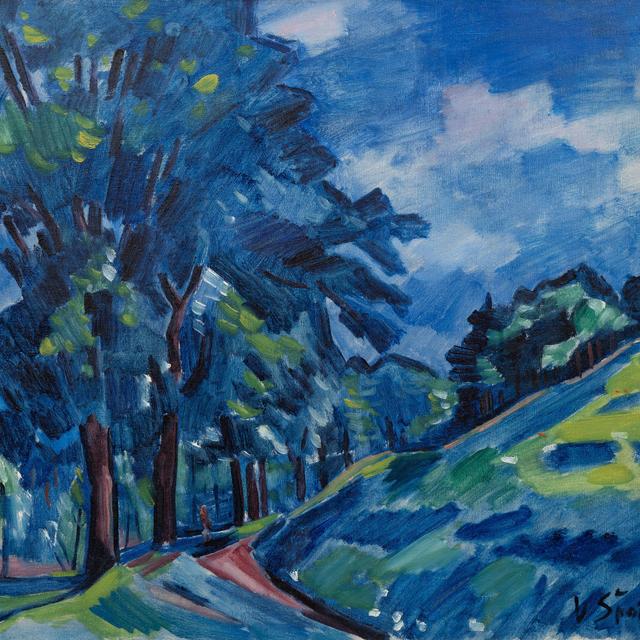
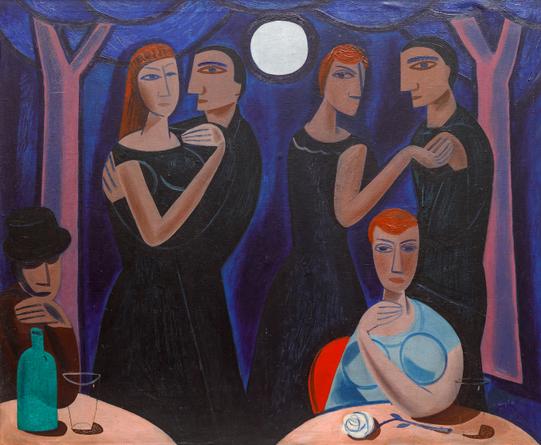
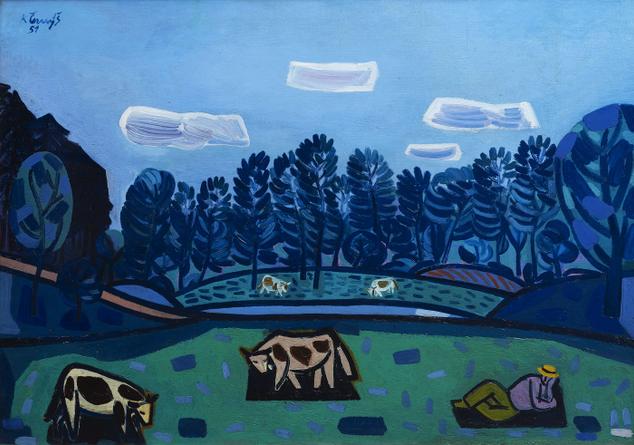
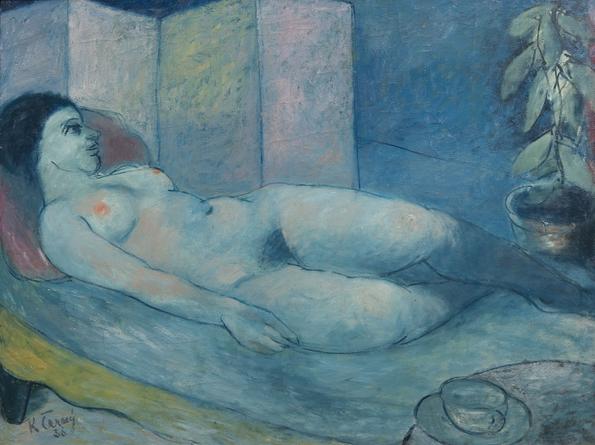
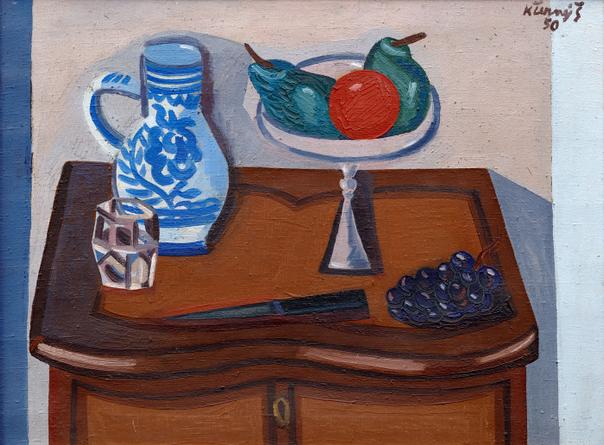
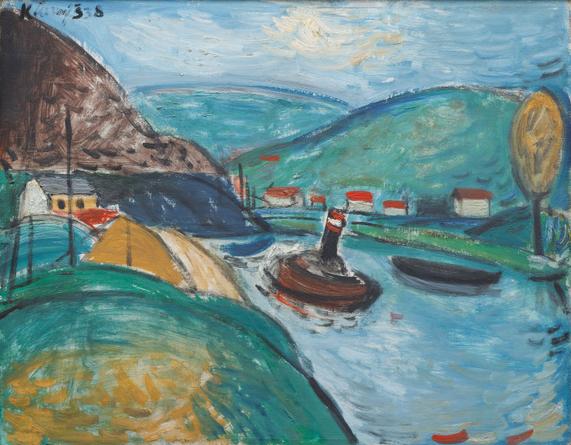
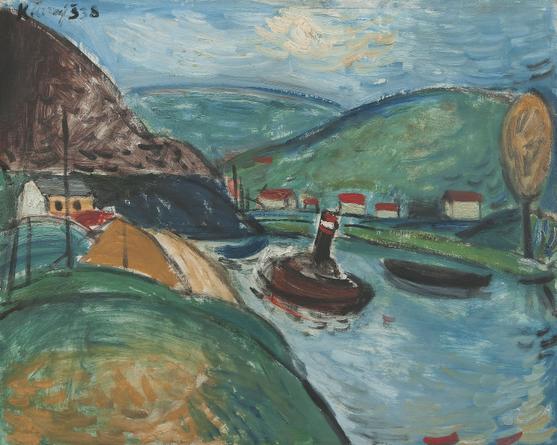
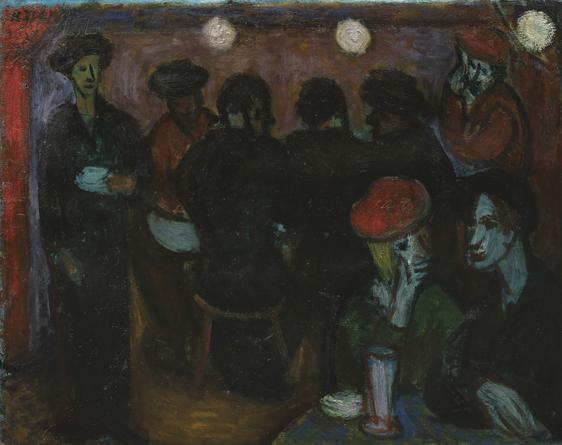
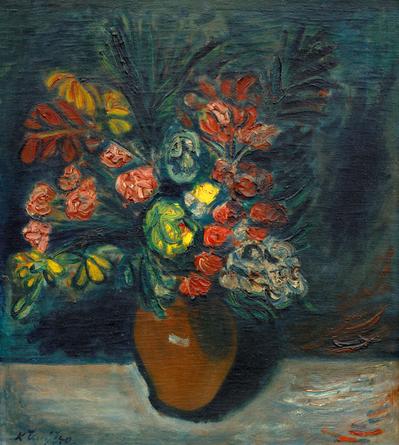
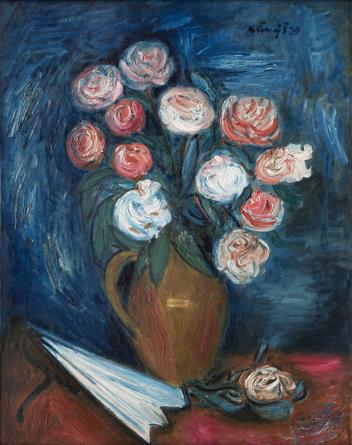
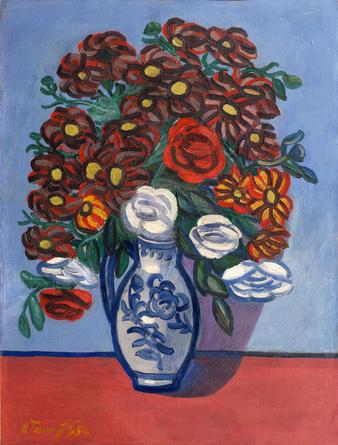
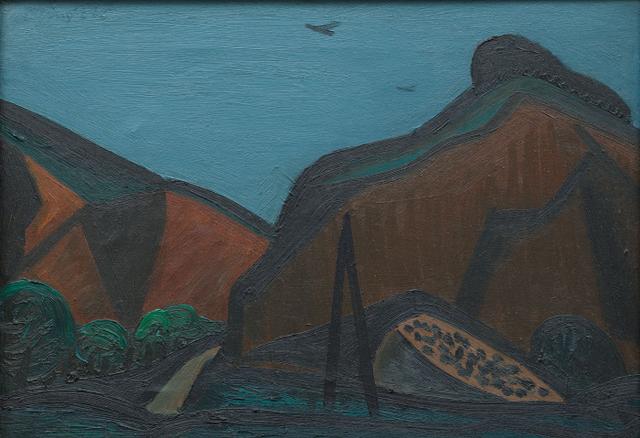
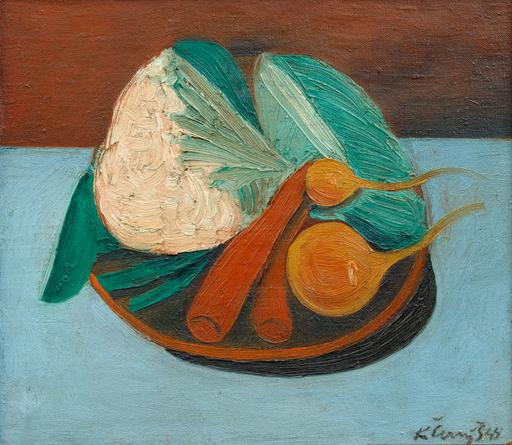
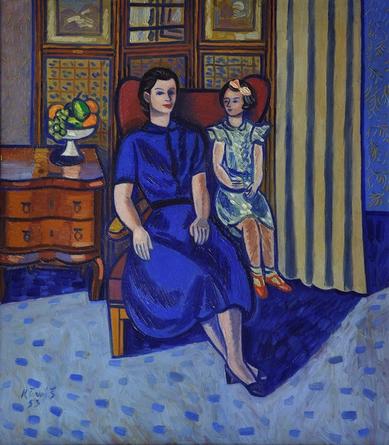
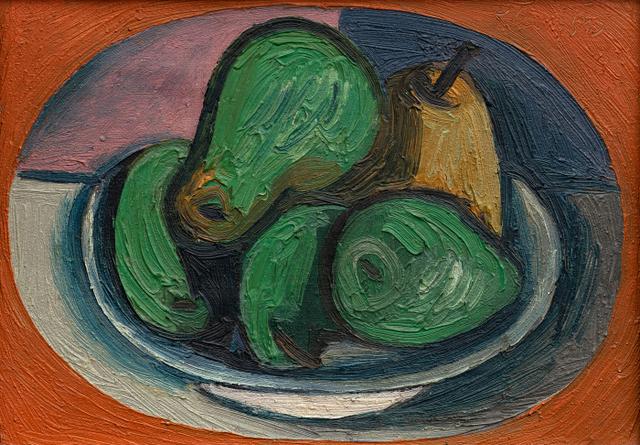
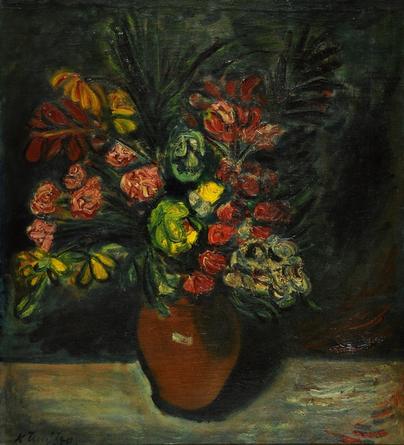
Karel Černý is the author of a number of paintings with a significant, unmistakable level of artistry. Early in his career, he painted figures in natural environments in melancholic, blue-green tones that offer a distant reference to Impressionism as interpreted in the artist’s distinct way. A dark, fluid blending of melancholic blue, brown and violet-hued reflections, imbued with a sense of sorrow and mourning, became a characteristic attribute of his artistic expression. He often applied paint to the canvas with gestural, dynamic, short brushstrokes and enclosed the painted areas within lines of colour. The artist’s favourite themes included the landscape around Podbaba, Koryta and Pacov, as well as night views of cities and gardens, restaurants, cafés, bars, circuses and Spanish women. In 1938–1939, Černý reached the pinnacle of Symbolist-Expressionist expression and expanded his repertoire with the genre of still life. The term “new poetry” was applied to a segment of his work.
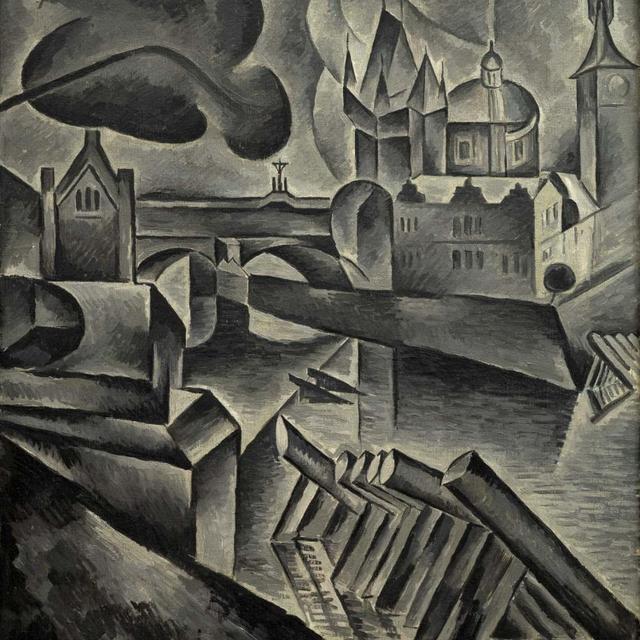
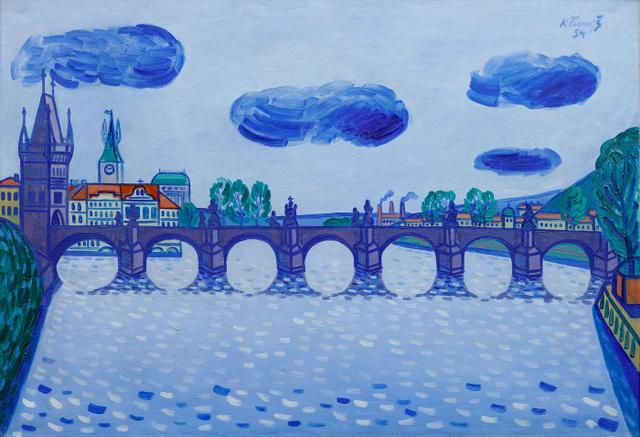
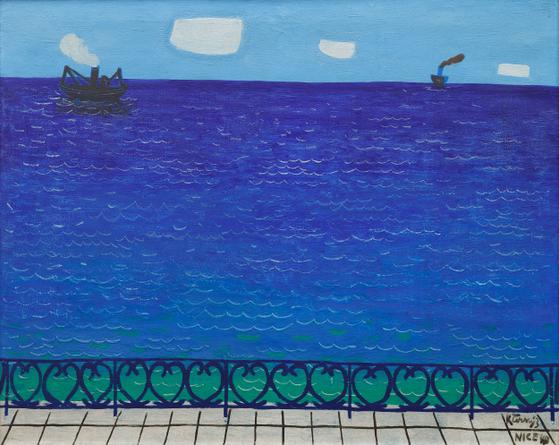
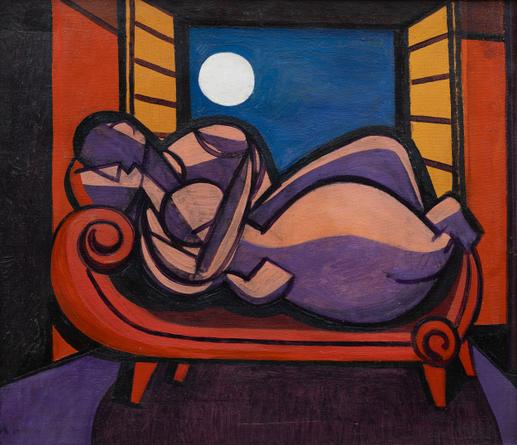
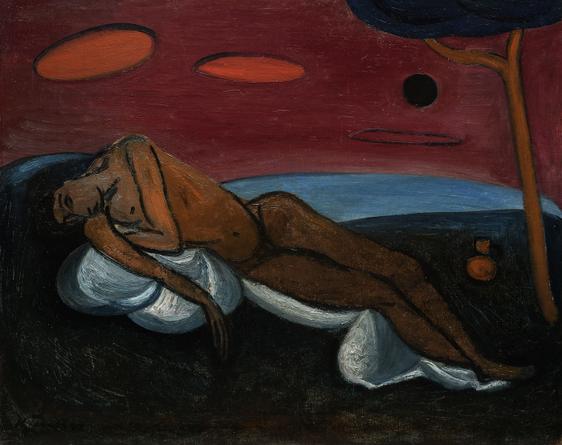
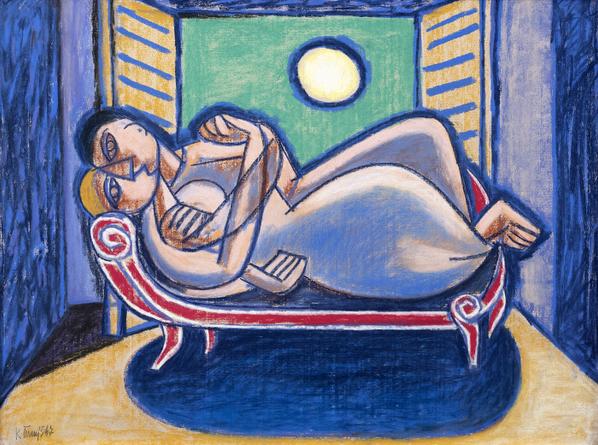
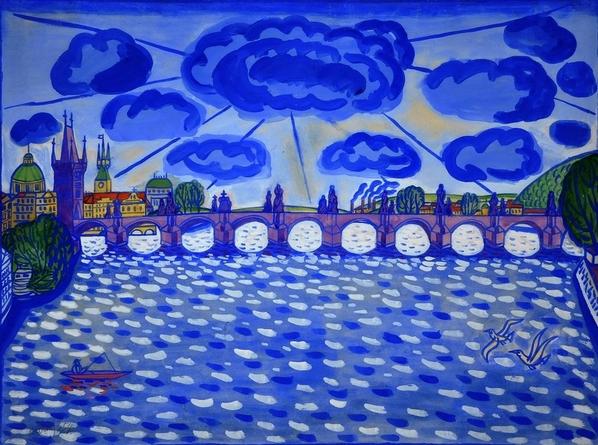
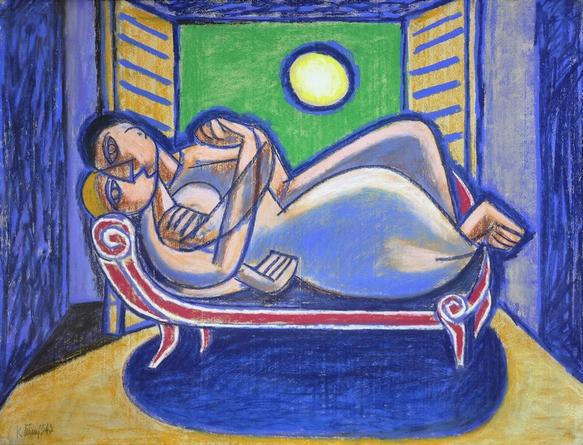
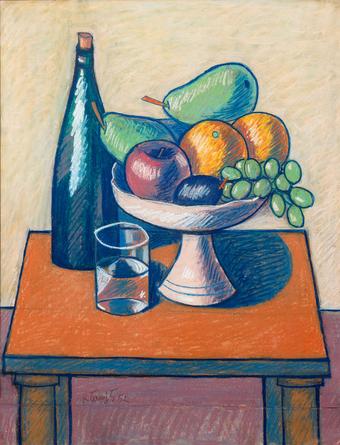
In 1943, he created the painting The Lovers, which is part of the National Gallery’s permanent exhibition and can rightly be associated with magical realism. His work of the 1940s was further marked by a relaxation in the construction of images, produced in part by a re-evaluation of synthetic Cubism. At that time, he preferred to paint in black, crimson red and white, symbolising the themes of death, sacrifice and hope. During a stay in Paris, his palette lightened significantly, as he captured the banks of the Seine, flower stalls and the Eiffel Tower. The final phase of his painting career was devoted to attempts to create monumental forms and is particularly associated with an impressive series of paintings of the Charles Bridge. At the end of his life, the artist drew architecturally constructed maritime landscapes, most often with charcoal, pastel or red chalk.
Items of the author
4,000,000 CZK
Final price:
20,160,000 CZK
6,000,000 – 12,000,000
4,500,000 CZK
Final price:
9,360,000 CZK
4,000,000 – 8,000,000
3,000,000 CZK
Final price:
8,400,000 CZK
3,000,000 – 6,000,000
2,000,000 CZK
Hammer price:
6,200,000 CZK
3,800,000 CZK
Final price:
6,480,000 CZK
700,000 CZK
Final price:
2,520,000 CZK
2,000,000 – 3,000,000
1,500,000 CZK
Final price:
2,400,000 CZK
1,800,000 CZK
Final price:
2,280,000 CZK
600,000 – 800,000
500,000 CZK
Final price:
1,200,000 CZK
600,000 CZK
Final price:
1,080,000 CZK
700,000 – 1,400,000
500,000 CZK
Final price:
600,000 CZK
400,000 CZK
Final price:
480,000 CZK
100,000 – 250,000
70,000 CZK
Final price:
264,000 CZK