František Kupka (1871–1957)
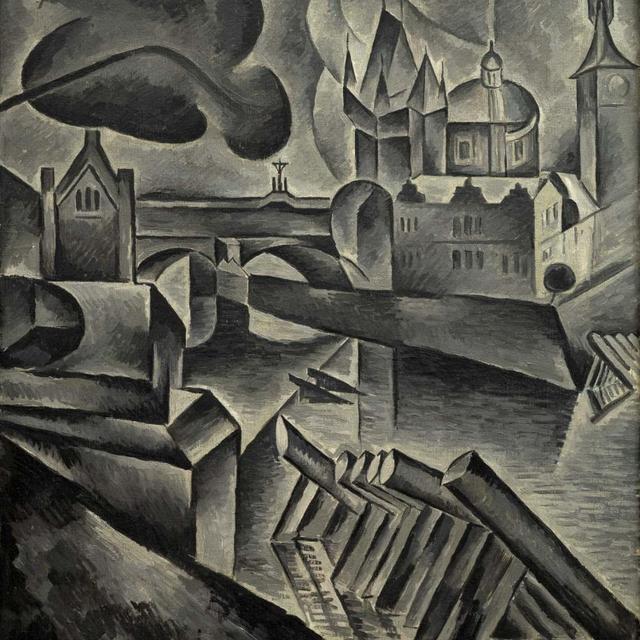
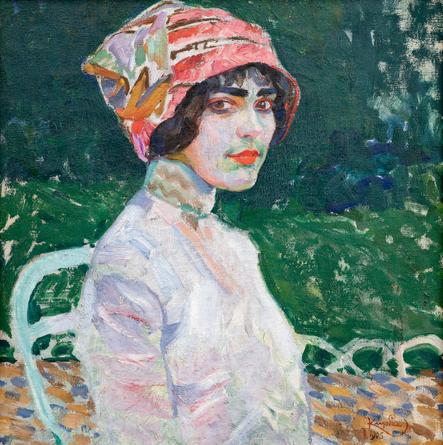
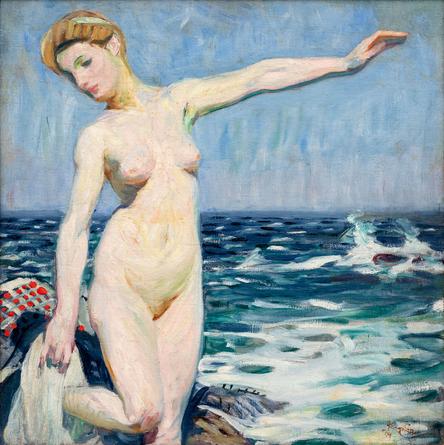
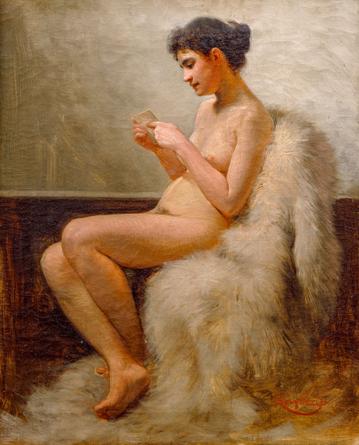
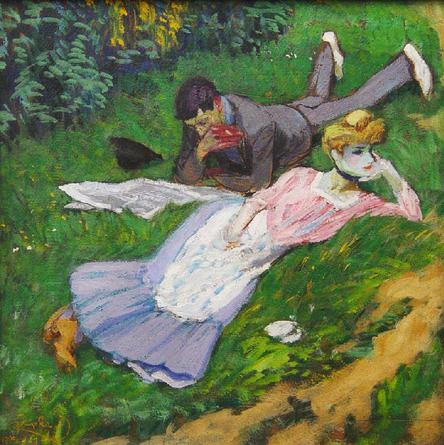
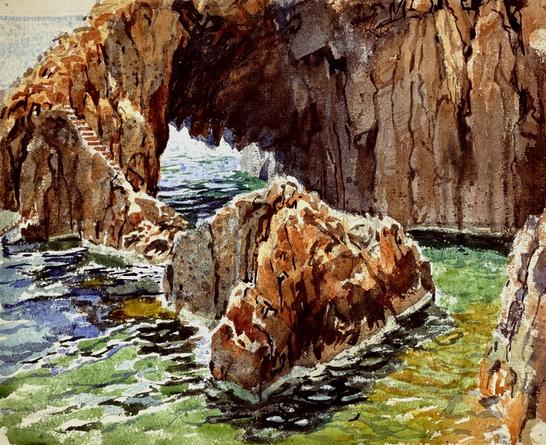
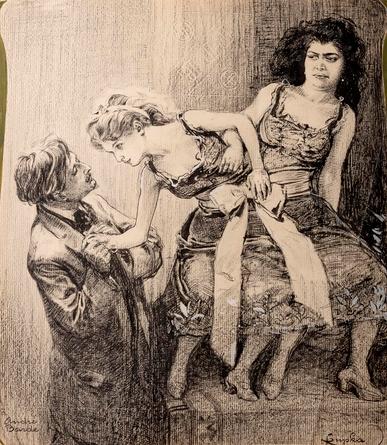
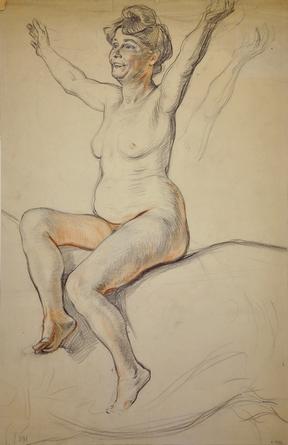
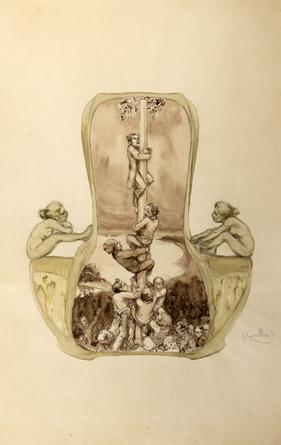
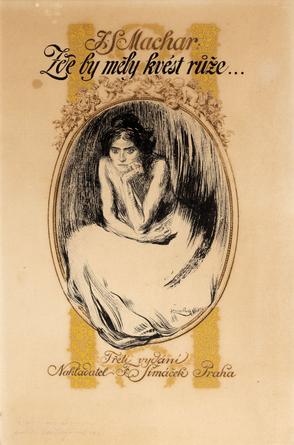
František Kupka was a figure of unusual breadth and multifacetedness – a brilliant painter, printmaker, cartoonist for satirical publications, illustrator, intellectual, philosopher and visionary. He spent the majority of his life in Paris and is indelibly inscribed in the history of the visual arts through his work, both in the Czech Republic and globally. His choice of just a few motifs, to which he constantly returned throughout his career, is also unique. Through them, he addressed questions concerning the relationship between colour and form.
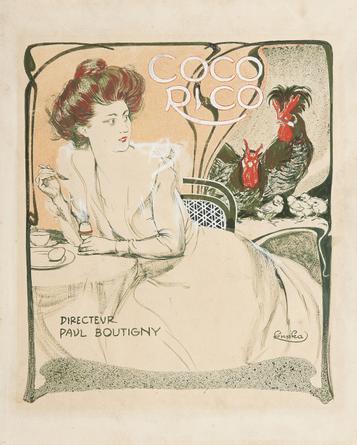
In his youth, he trained as a saddler, but because he showed great talent for painting while working on signboards, he was sent, at the recommendation of a family friend, first to a craft school in Jaroměř (1886) and later to the Academy of Fine Arts in Prague (1887–1891). He studied under the tutelage of Professor Sequens, after which he departed for Vienna (1891–1895) and Professor Eisenmenger. In 1895, he set out on a study tour of Paris. While studying at the École des Beaux-Arts, he made his living painting posters, studied religion and even appeared as a spiritual medium. Beginning in 1901, he drew for satirical magazines such as Cocorico, La Plume, and L’Assiette au Beurre (the albums Money, Religion and Peace). Around 1911, Kupka and his friends (A. Gleizes, F. Picabia, La Fresnaye, F. Léger, J. Metzinger, the poet G. Apollinaire, etc.), some of whom had established the celebrated group Section d’Or, met in the Paris suburbs and shaped the emerging principles of modern art according to their own vision: Orphism, Futurism, Cubism, Cubo-Futurism and Rayonism.
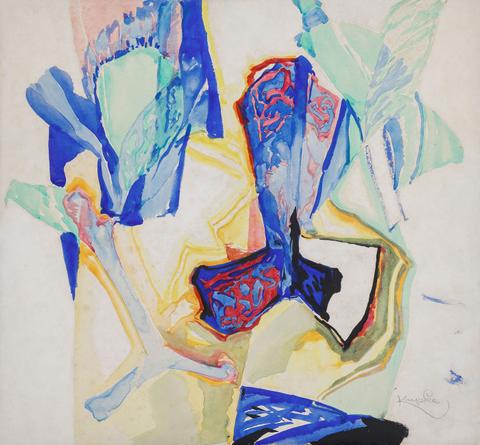
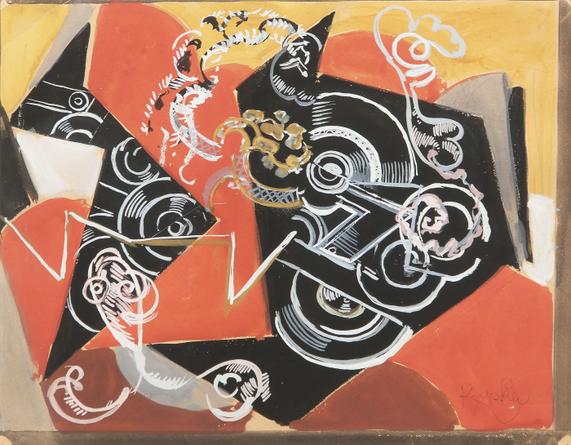
A period of intensive personal study and interest in colour theory led to abstract paintings. His first experiments with the sculptural qualities of colour led him to understand a painting as a melody balanced by a harmony, making him one of the founders of modern abstract painting. A strong relationship to music drove the artist, like his Parisian colleagues, the married couple Sonia and Robert Delauney, to develop the artistic movement of Orphism. The painter’s desire was not to create according to nature, but to depart from the same principles and rules as nature itself. Gradually, he arrived at the rendering of an abstract idea of movement with the help of two colours; the result was the iconic canvas Amorpha: Fugue in Two Colours, his first abstract painting (along with Amorpha: Warm Chromatic), which was presented to the public at the Autumn Salon in Paris in 1912. The studies for these paintings led the artist to further work with colour surfaces, abstract lines and points (the cycle Vertical Planes, Solo of a Brown Line, etc.); a fascination with micro- and macrocosmos resulted in the series Cosmic Springs.
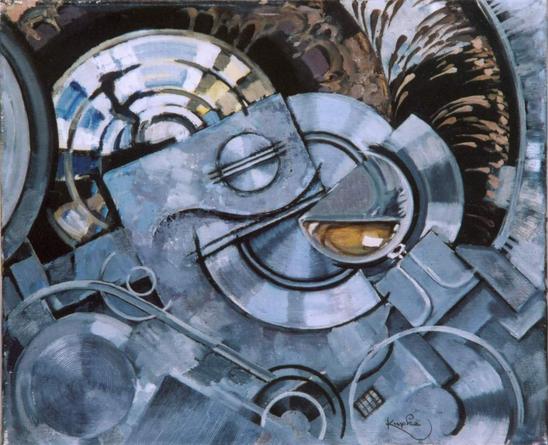
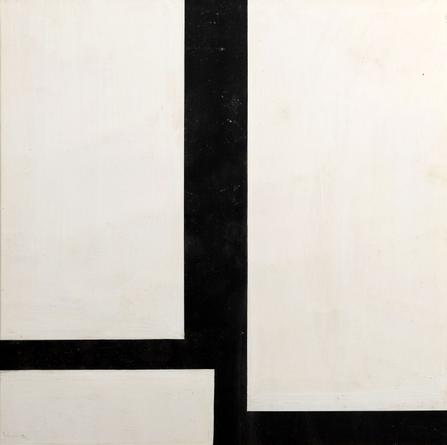
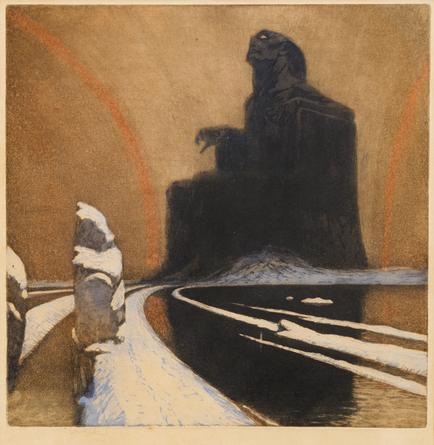
In 1914, Kupka enlisted in the French army, where he helped to organise the Czechoslovak Legions, achieved the rank of captain and was even named an Officer of the Legion of Honour. After the war, he became a professor at the Academy of Fine Arts in Prague, where he lectured beginning in 1920, prior to relocating his pedagogical activities to Paris, where he looked after Czechoslovak scholarship students. From 1919 to 1938, Kupka’s chief supporter was the Prague entrepreneur Jindřich Waldes. In 1926, Kupka published a graphic album in Paris. Titled Four Stories of White and Black, it presented the conclusions of all the morphological problems he had explored to that date; organic, triangular, cosmic, vertical and diagonal cycles are represented here. During and after World War II, Kupka was captivated by mechanisms; he created a series of energetic, mechanical compositions, which he gradually built upon, particularly during his time with the Abstraction-Création group, in the cycles Pure Forms – Syntheses and Series C.
Items of the author
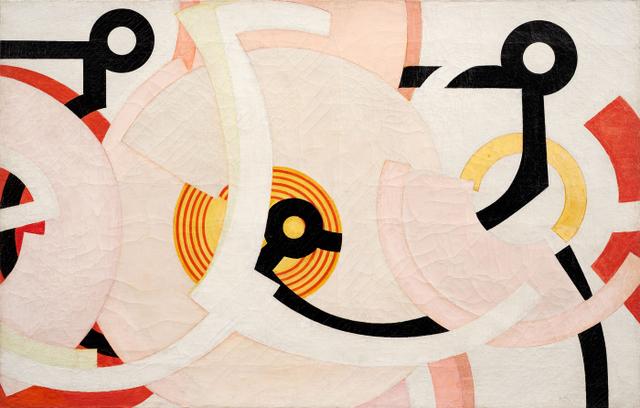
30,000,000 CZK
Final price:
90,240,000 CZK
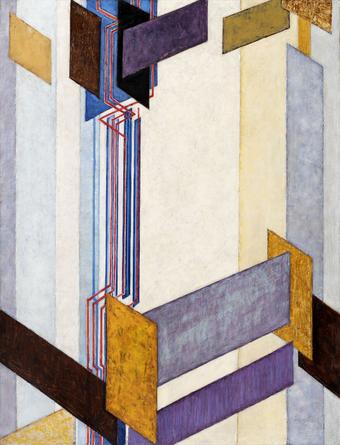
28,000,000 CZK
Final price:
78,000,000 CZK
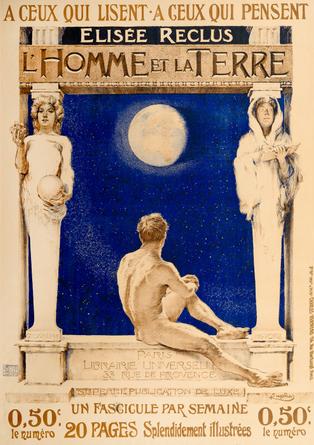
—
Final price:
51,120,000 CZK
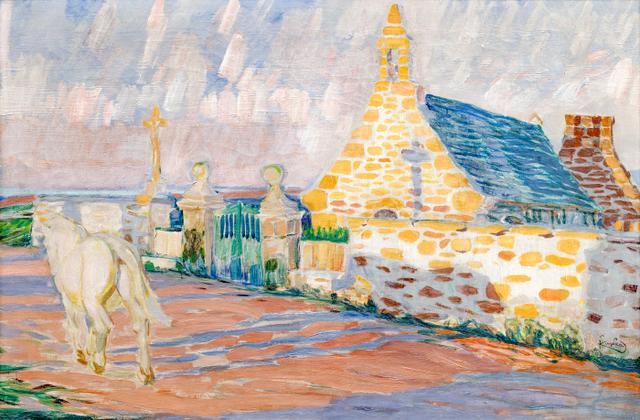
5,300,000 – 6,300,000
3,500,000 CZK
Final price:
5,160,000 CZK
1,400,000 CZK
Final price:
2,760,000 CZK
1,400,000 CZK
Final price:
2,640,000 CZK
1,000,000 CZK
Final price:
2,160,000 CZK
1,000,000 CZK
Final price:
2,040,000 CZK
1,000,000 – 2,000,000
600,000 CZK
Hammer price:
1,300,000 CZK
400,000 – 800,000
250,000 CZK
Final price:
1,080,000 CZK
400,000 – 600,000
200,000 CZK
Final price:
1,020,000 CZK
450,000 CZK
Final price:
540,000 CZK
200,000 CZK
Final price:
480,000 CZK
600,000 – 1,000,000
300,000 CZK
Final price:
456,000 CZK
220,000 CZK
Final price:
336,000 CZK
300,000 – 600,000
200,000 CZK
Final price:
312,000 CZK
90,000 CZK
Final price:
216,000 CZK
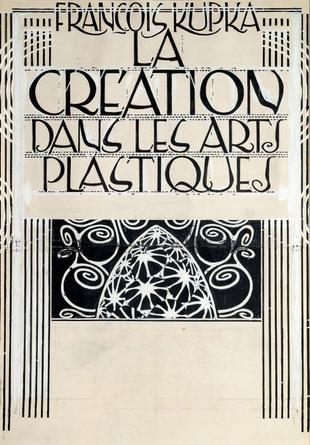
100,000 CZK
Final price:
156,000 CZK
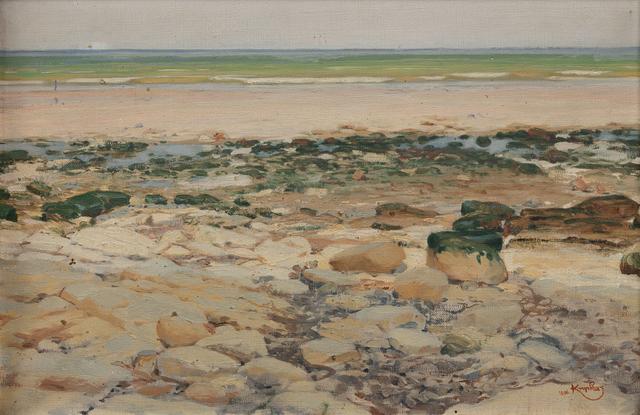
3,000,000 – 5,000,000
1,900,000 CZK