Zdeněk Sýkora (1920–2011)
Zdeněk Sýkora occupies an exclusive position in the Czech art scene of the mid-to-late twentieth century. He is one of the most sought-after Czech artists internationally, and his works appear in galleries in Vienna, Paris and Nuremberg.
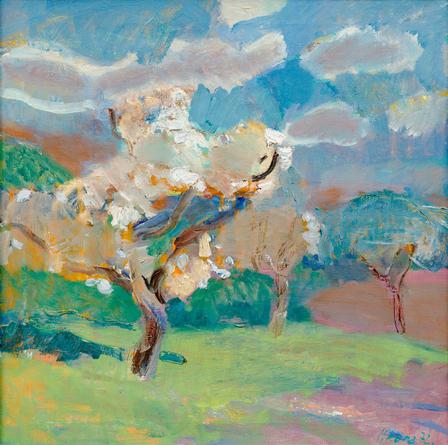
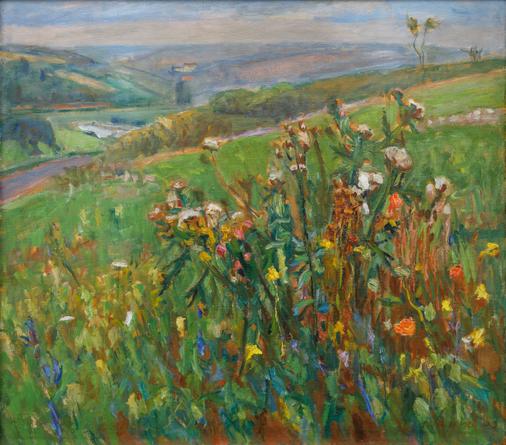
After graduating from secondary school in Louny, Sýkora attended the Mining University in Příbram (1938–1939), but his studies were interrupted by the closure of the universities in 1939. Until the end of World War II, he worked for the railways; his first experiments in painting date from 1940. After the war, he studied arts education, descriptive geometry and model-making at Charles University in Prague (where he taught from 1947 and was named a senior lecturer in painting in 1960). In the late 1940s, following early experiments with Surrealism and Cubism, he pursued landscape painting, capturing in particular the area around his native Louny. His landscapes gradually progressed through a number of transformations in style (from Realism through Impressionism to Fauvism), before he began producing paintings with reduced colours and shapes in the late 1950s (the cycle Gardens). A decisive turn in Sykora’s work occurred when he encountered a collection of Henri Matisse’s works at the Hermitage in St. Petersburg in 1959 and arrived at an abstract mode of expression in a very short period of time. He based his compositions on the relationships between basic geometric shapes, soon starting to organise them on grids. This approach resulted from his attempt to objectify and reduce expressive means; it is similar to the concepts of Neoconstructivism, as well as American hard-edge painting.
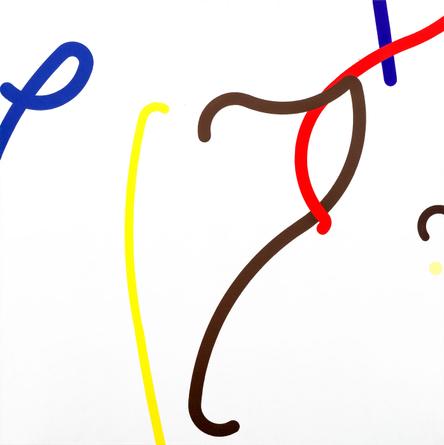
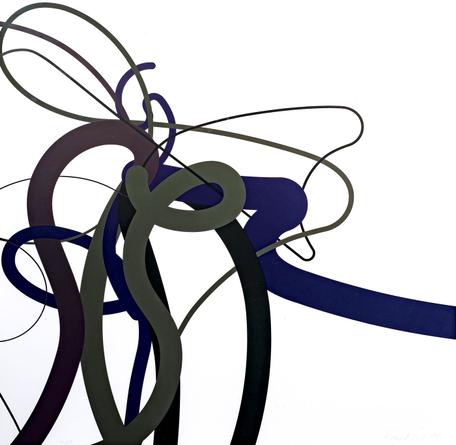
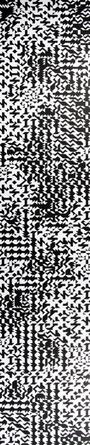
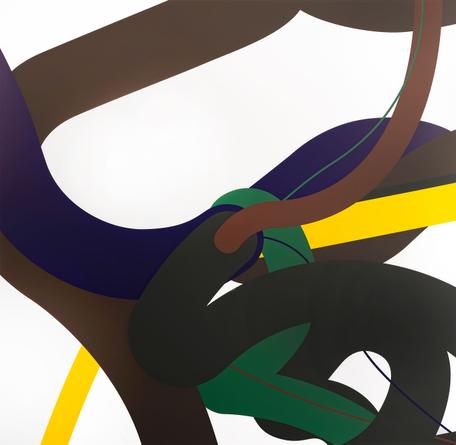
In late 1962 and early 1963, Sýkora worked on his first “structures” (Grey Structure, 1962) and was involved in the establishment of the Prague artist group Intersection (Křižovatka) in autumn 1963. In 1964, he created his first computer-aided structures, becoming a global pioneer of this method with an important position on the international art scene. His works were acquired by leading European and American collections. From 1967 to 1969, Sýkora also worked in architecture. He completely abandoned geometric structures during the 1970s and developed a new system based on randomisation and linear work, with shape, colour and points of intersection determined by numbers randomly generated by a computer. In 1980, he entered retirement and pursued only painting. In 2003, the French Minister of Culture awarded him the title Knight of the Order of Arts and Letters; in 2005 he received Austria’s prestigious Herbert Boeckl Award.
Items of the author
450,000 – 650,000
380,000 CZK
Final price:
456,000 CZK
80,000 CZK
Final price:
300,000 CZK
120,000 CZK
Final price:
216,000 CZK
120,000 CZK
Final price:
180,000 CZK

120,000 CZK
Final price:
180,000 CZK
150,000 CZK
Final price:
180,000 CZK
90,000 CZK
Final price:
168,000 CZK